Truckers, rails looking to share the load
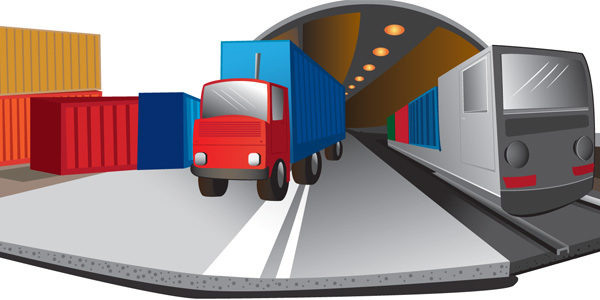
As truckers and railroads mark the 30th anniversary of their freedom from government bondage, they find themselves in a position they and the lawmakers who deregulated both industries in 1980 could have scarcely imagined back then. Partners.
To be sure, the day has not arrived when both can shake off all the vestiges of their traditional rivalry. Truckers chafe at the notion that railroads could receive federal subsidies to modernize privately owned track and rolling stock. The railroads have no problem boasting about how their operations are more fuel-efficient and environmentally friendly than trucking, a tack that doesn't win the rails many friends among trucking interests, who happen to be their largest customers.
In addition, unless the trucker is tendering freight in very large quantities, it is unlikely to receive more favorable pricing or customized service than any other intermodal customer, according to Thomas Finkbiner, who headed Norfolk Southern Corp.'s intermodal operations in the 1990s and is now executive vice president, sales and marketing for Railex, a provider of refrigerated rail transport, warehousing, and distribution services.
For all the political infighting, however, the two industries are increasingly discovering their respective strengths can be mutually beneficial. Trucks provide railroads with a steady and growing stream of intermodal business, while intermodal helps trucks obtain additional capacity while reducing their operating expenses compared to over-the-road transport. Shippers also gain from increased service options at lower cost and with enhanced environmental benefits.
If there is a loser in this scenario, it might be the truck driver community, which could see reduced work opportunities should more freight that once moved over the road be converted to rail.
A more passionate tango
The rail-truck intermodal tango is not a new dance —UPS Inc., which many would still consider a trucking company, has been for years the railroad industry's largest individual customer. But increasing acceptance of the rails' energy, environmental, and infrastructure advantages, combined with improvements in intermodal reliability and velocity (consultancy FTR Associates today clocks average intermodal train speeds at 33.5 miles per hour, much higher than the historical averages of 30 mph or lower) is sparking more rail-truck intermodal interest than ever before.
Another plus is that trucking firms bring a depth of sales and marketing expertise to the intermodal table that railroads, for the most part, do not have. Larry H. Kaufman, a long-time rail executive, consultant, and writer, says rail management is more comfortable working with its traditional base of captive commodity shippers than with businesses using intermodal service to move merchandise traffic. Given that, rails are happy to let the truckers handle the intermodal marketing, Kaufman says.
Recent events and anecdotes underscore the growing bond between the two modes:
- In early November, trucking giant J.B. Hunt Transport Services and Norfolk Southern dramatically expanded their 10-year intermodal relationship in a deal that will cover a swath of the East Coast equivalent to roughly one-third the area of the United States.
- Con-way Truckload, Con-way's full-truckload division, will begin intermodal service this year in an agreement involving a major shipper and Eastern railroad on a lane along the Eastern Seaboard. Con-way Truckload would not provide specifics at this writing.
- Less-than-truckload (LTL) carrier Averitt Express continues to be actively courted by as many as four railroads eager for Averitt's over-the-road freight that could be converted to intermodal service. Averitt spokesman Brad Brown would say only that the company is "working to establish strategic relationships with the railroads to deliver world-class intermodal options for our customers."
At the same time, the railroads are expanding their domestic intermodal networks in a bid to attract more trucking business. Norfolk Southern has launched a "Crescent Corridor" intermodal initiative with service stretching from New England, northern New Jersey, and Pennsylvania southward to Memphis, Tenn., and New Orleans. As part of the project, the railroad will build new intermodal terminals in Birmingham, Ala.; Memphis; and Greencastle, Pa. The three terminals are set to open in early 2012. Norfolk is also developing the "Patriot Corridor" project with Pan American Railways that will link Boston and Albany, N.Y., with intermodal service.
In the Midwest, the state of Kansas applied in September for $50 million in federal stimulus funds to build a Burlington Northern Santa Fe Railway intermodal facility in Edgerton, near Kansas City. If the state's application is approved, work could begin this year, BNSF said in a statement.
The rails are moving ahead with these initiatives because they understand domestic intermodal is where their future bread is likely to be buttered. In 2009, domestic services accounted for 48 percent of total intermodal volumes, with international accounting for the balance, according to the Intermodal Association of North America (IANA). In 2006, domestic service accounted for only 41 percent of all intermodal traffic, IANA said.
From September to October 2009, domestic container intermodal traffic grew 9 percent, the strongest sequential growth of the year, IANA said. The domestic container segment was the one bright spot in an otherwise dismal 2009 for intermodal and rail traffic.
Given an inch, will they take a mile?
As railroads focus more attention on domestic intermodal, they will likely be asked to perform over shorter lengths of haul than they are accustomed to handling. That could put railroads in direct competition with truckers on regional services that have not only been the trucks' traditional realm but which have been the fastest-growing category of U.S. transportation.
The rails are not there yet. According to FTR data, the average length of haul of a domestic intermodal movement in the third quarter was 1,507 miles, hardly a short stage length.
In the past, rail executives have said they couldn't provide a profitable and cost-effective intermodal service at hauling lengths of less than 900 miles. But thanks to improved service levels and better traffic density that cuts the time a train needs to be held for full loading, rail executives say they can today offer competitive intermodal service between 750 and 1,000 miles, and even as short as 500 to 600 miles.
"Today, 500 to 600 miles is right around the break-even point," says Finkbiner of Railex.
Even some of the truckers are cognizant of the potential for increased competition from the railroads. In its press release announcing the intermodal deal with Norfolk Southern, J.B. Hunt said the service would be "competitive with truckload moves."
Jim Bolander, Norfolk Southern's assistant vice president of intermodal pricing and development, says the railroad's short-haul freight —known within the company as "low cal" freight —posted double-digit annual gains from 2003 through 2008 and even showed modest growth during a difficult 2009. The average length of haul is 500 to 700 miles between intermodal ramps, and 600 to 1,000 miles door to door, according to Bolander.
"This has been our domestic growth story," he says.
Bolander says the railroad is simply going with the customer flow, which today often means regionally based shipping and distribution. "We are not looking to shrink our length of haul. But we are following the freight," he says.
Truckers, for their part, don't seem too concerned. Nor should they be, according to some analysts. Trucks are unencumbered by the need to find railheads, track, or rail ramps. In addition, they have the edge over railroads when it comes to travel distances. Because the foundations of the nation's rail network were laid before 1900 and follow the contours of America's coastal and inland waterways, which were not the shortest distance between two points, the average rail move remains about 20 percent longer than the typical truck move.
Then there is the expense of the dray —the delivery to and from the rail ramps —that can often offset the economic benefits of the rail move itself.
On longer hauls, there is enough revenue mileage for a railroad to incorporate the drayage expense and still provide savings to the shipper and consignee. On shorter distances, however, there is less of a cushion. With fewer rail miles to work with, the high cost of drayage will often make a rail move more expensive than a door-to-door movement by truck, analysts say.
Larry Gross, an analyst for FTR, says the only way railroads can compete with trucks over shorter lengths of haul is if railroads built more local or "secondary" terminals that would allow drayage to be performed within 50 to 60 miles of a shipper's plant or the consignee's dock.
"The more secondary terminals that are established, the greater intermodal's competitiveness at the shorter lengths of haul will be," Gross says.
Given that railroads are far from building out such dense infrastructures, Gross doesn't see much of a competitive threat to trucks from intermodal. "I don't think that truckers operating in the 500- to 750-mile lengths of haul have too much to worry about," he says.
Herb Schmidt, president of Con-way Truckload, agrees, saying that "short-haul on rail is trying to stick a square peg in a round hole." And Curtis Whalen, executive director of the American Trucking Associations' Intermodal Motor Carriers Conference, says he's not worried about where his members' next load is coming from, especially as a truck must be a part of every intermodal move. "Our guys will keep pretty busy," he says.
Observers like Finkbiner of Railex believe a spike in diesel fuel prices similar to what occurred in 2008 could shift the balance in favor of rails even at shorter lengths of haul. Gross insists, however, that the most important factor is "not the price of the fuel but the footprint of the rail intermodal network."